Heavy Machinery Requires Specialized Hauling
Equipment Transportation in Pensacola for machinery, trailers, work vehicles, and commercial equipment serving construction sites and industrial operations
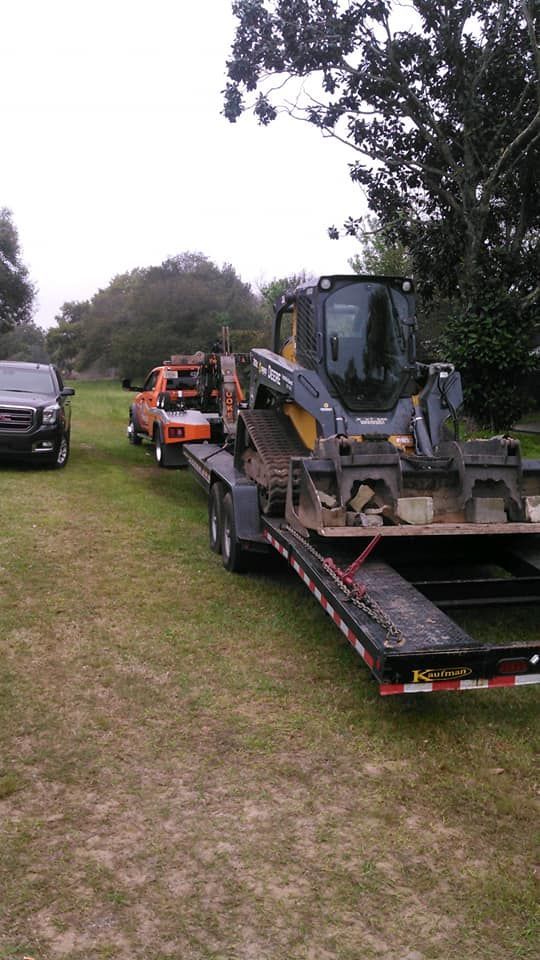
Construction sites, industrial facilities, and commercial operations frequently need to relocate equipment between job locations, storage yards, and maintenance facilities. 1st Response Roadside handles equipment transportation in Pensacola for machinery, work trailers, and commercial vehicles that cannot travel on public roads under their own power or require professional hauling to meet project schedules. Safe loading procedures prevent shifting during transport, secure tie-downs distribute weight across the trailer bed, and experienced operators account for load height and weight when planning routes through regional transportation corridors.
Equipment transportation involves assessing load dimensions and weight capacity requirements, selecting appropriate trailer configurations, securing machinery using chains and binders rated for the equipment mass, and coordinating delivery timing with site access schedules. Contractors and businesses use these services when purchasing new equipment, relocating machinery between active job sites, transporting disabled work vehicles to repair facilities, or moving assets into long-term storage.
Schedule transportation service to coordinate equipment delivery with your project timeline and site access windows.
Why Proper Loading and Hauling Methods Matter
Safe equipment transportation starts with load assessment—measuring equipment dimensions, verifying weight against trailer capacity limits, and identifying proper attachment points that distribute securing forces without damaging hydraulic lines or structural components. Equipment is loaded using ramps rated for the machinery weight, positioned to balance load distribution across trailer axles, and secured using grade-rated chains that prevent horizontal and vertical movement during acceleration, braking, and cornering. Operators plan routes that avoid low-clearance bridges, weight-restricted roads, and narrow passages that cannot accommodate trailer width.
After transport completes, your equipment arrives at the destination without damage to painted surfaces, hydraulic systems, or mechanical components. Load securement leaves no marks from improper chain placement, machinery operates normally after unloading, and delivery timing matches site readiness for equipment offloading. Reliable scheduling allows contractors to plan labor assignments around guaranteed equipment arrival rather than holding crews idle waiting for delayed deliveries.
Equipment transportation includes hauling construction machinery like skid steers and excavators, moving utility trailers and job site storage containers, relocating disabled work trucks and service vans, and transporting industrial assets between facilities. Service does not include crane operations for overhead lifting or specialized rigging for oversized loads requiring pilot car escorts and highway permits. Standard equipment transportation focuses on loads within legal road limits that fit conventional trailer configurations.
What Property Owners Usually Ask
Businesses and contractors throughout Pensacola and surrounding industrial areas depend on equipment transportation when operations require machinery relocation.
What size equipment can be transported using standard services?
Most construction equipment under fifteen thousand pounds and fitting within standard trailer widths moves without special permits. Larger machinery may require oversized load procedures including route surveys and escort vehicles.
How do operators prevent damage to equipment during loading?
Loading procedures use ramps positioned at safe angles to prevent ground clearance scraping, and operators avoid sudden movements that stress hydraulic cylinders or mechanical linkages. Equipment with low ground clearance may require specialized trailers with reduced deck height.
When should equipment be transported instead of driven to job sites?
Transport becomes necessary when machinery lacks road-legal lighting and signaling equipment, when track-driven equipment would damage paved surfaces, when equipment speeds cannot safely match traffic flow, or when travel distance makes self-transport impractical due to fuel costs and time.
What information do dispatchers need to plan equipment transportation in the Pensacola area?
Provide equipment type and model, estimated weight if known, dimensions including height and width, pickup and delivery addresses with site access notes, and preferred delivery timing. This information helps select appropriate trailers and plan efficient routes.
Why does secure transport handling matter for business operations?
Equipment downtime from transport damage disrupts project schedules, creates repair costs, and delays contractor revenue generation. Professional handling with proper securement reduces these risks compared to improvised transport methods using undersized trailers or inadequate tie-downs.
1st Response Roadside serves contractors, businesses, and industrial operations across Pensacola, Milton, and regional construction areas where equipment mobility affects project efficiency. Contact us to arrange equipment transportation that meets your delivery requirements and protects machinery during transit.