Commercial Vehicles Moved When Breakdowns Happen
Heavy-Duty Towing in Pensacola for semis, commercial trucks, buses, trailers, and equipment experiencing breakdowns or accident damage
Interstate 10 carries constant commercial truck traffic between Florida and Alabama, and when a semi experiences transmission failure or a loaded trailer loses braking capability, standard towing equipment cannot handle the weight or mechanical complexity these vehicles present. 1st Response Roadside provides heavy-duty towing in Pensacola using specialized equipment rated for vehicles that exceed 26,000 pounds and require towing approaches that account for air brake systems, tandem axles, and cargo considerations that passenger vehicle recovery never encounters. Fleet operators, owner-operators, and commercial drivers working industrial routes receive support that recognizes the financial impact of extended downtime and the regulatory requirements surrounding commercial vehicle transport.
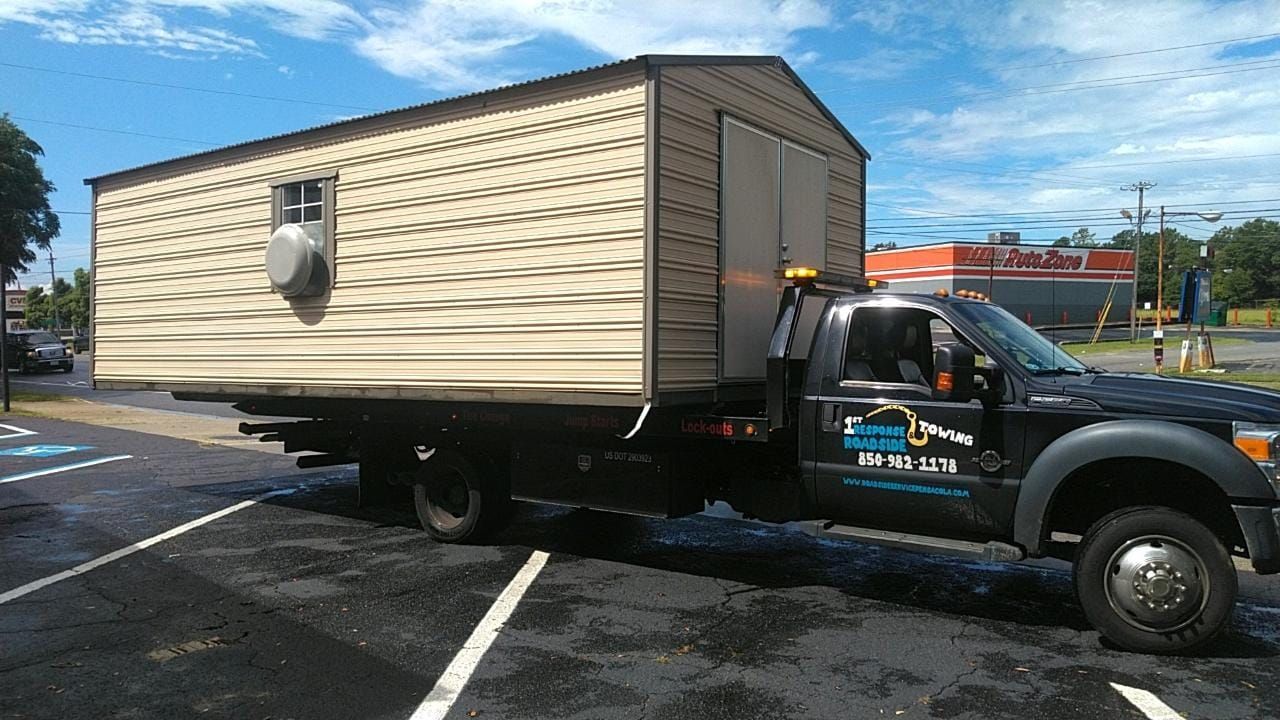
Heavy-duty towing equipment includes rotator wreckers that can lift and stabilize overturned vehicles, underlift systems designed to engage truck frames without damaging air lines or electrical systems, and flatbed platforms long enough to accommodate vehicles with extended wheelbases or attached trailers. What separates heavy-duty towing from standard vehicle recovery is the load capacity, rigging knowledge required to safely secure commercial vehicles, and familiarity with diesel systems, air brake configurations, and weight distribution challenges that affect every aspect of the towing process.
Request a heavy-duty transport evaluation to discuss your commercial vehicle breakdown or recovery situation.
Why Commercial Vehicle Transport Requires Specialized Approaches
Towing procedures for commercial vehicles account for weight distribution across multiple axles, air brake systems that must be properly caged before transport, and mechanical components that sit lower to the ground than passenger vehicles and require precise equipment positioning to avoid damage during loading. Buses with rear-mounted engines need different attachment points than flatbed trucks hauling construction equipment, and loaded trailers present center-of-gravity challenges that empty commercial vehicles do not.
Once your commercial vehicle reaches the repair facility or designated location, you notice that air lines remain intact, driveshafts that were disconnected for safe towing are properly secured, and the vehicle sits level without frame stress from improper lifting points. Commercial drivers familiar with equipment damage from inexperienced towing recognize when their vehicle was handled correctly because no additional mechanical problems appear after transport that were not present before the breakdown occurred.
Support for heavy-duty towing includes coordination with dispatchers who need updated ETAs for delayed shipments, communication with repair facilities about vehicle arrival times and specific mechanical failures, and documentation required by fleet management systems or insurance carriers. Some commercial breakdowns occur in locations where traffic control becomes necessary before towing can begin safely, particularly on highway shoulders or industrial access roads with limited space for maneuvering large recovery equipment.
What Property Owners Usually Ask
Commercial vehicle breakdowns create urgent situations where downtime directly affects business operations, and these questions address what fleet operators and commercial drivers need to understand about heavy-duty towing capabilities and procedures.
What commercial vehicle types can be towed using heavy-duty equipment?
Towing support covers semis with attached trailers, straight trucks ranging from delivery vehicles to large dump trucks, motor coaches and transit buses, construction equipment on roadways, and specialized commercial vehicles including tow trucks that themselves require recovery.
How does towing handle commercial vehicles that are loaded with cargo?
Loaded vehicles require weight assessment before towing begins to verify that recovery equipment can safely handle the total weight, and some situations require partial unloading or cargo transfer before transport can occur without exceeding equipment capacity or creating unsafe transport conditions.
Can heavy-duty towing respond to breakdown locations along Interstate 10 and Highway 98?
Mobile response covers major commercial transportation corridors throughout the Gulf Coast region, including highway shoulders, truck stops, weigh stations, industrial facilities, and construction sites where commercial vehicles operate and breakdowns occur.
What happens if a commercial vehicle breakdown occurs during peak traffic hours?
Response teams coordinate with traffic management to establish safe work zones, use warning equipment to alert approaching traffic, and execute towing procedures that minimize roadway obstruction time while maintaining safety for both recovery workers and passing motorists on busy routes.
How quickly can heavy-duty towing reach a breakdown location in Pensacola?
Response times depend on current call volume, equipment availability, and breakdown location, but commercial vehicle towing prioritizes rapid dispatch to reduce the business impact of extended roadside downtime for fleet operators and independent drivers.
1st Response Roadside works with commercial drivers and fleet operators across Pensacola, Mobile, Gulf Breeze, Milton, Robertsdale, and Foley when heavy-duty towing becomes necessary. Contact our dispatch team to arrange immediate commercial vehicle transport based on your specific breakdown circumstances and vehicle specifications.